
使命召唤
雷军的第一部视频《颤栗:红米小金刚》_我的网站

一 |
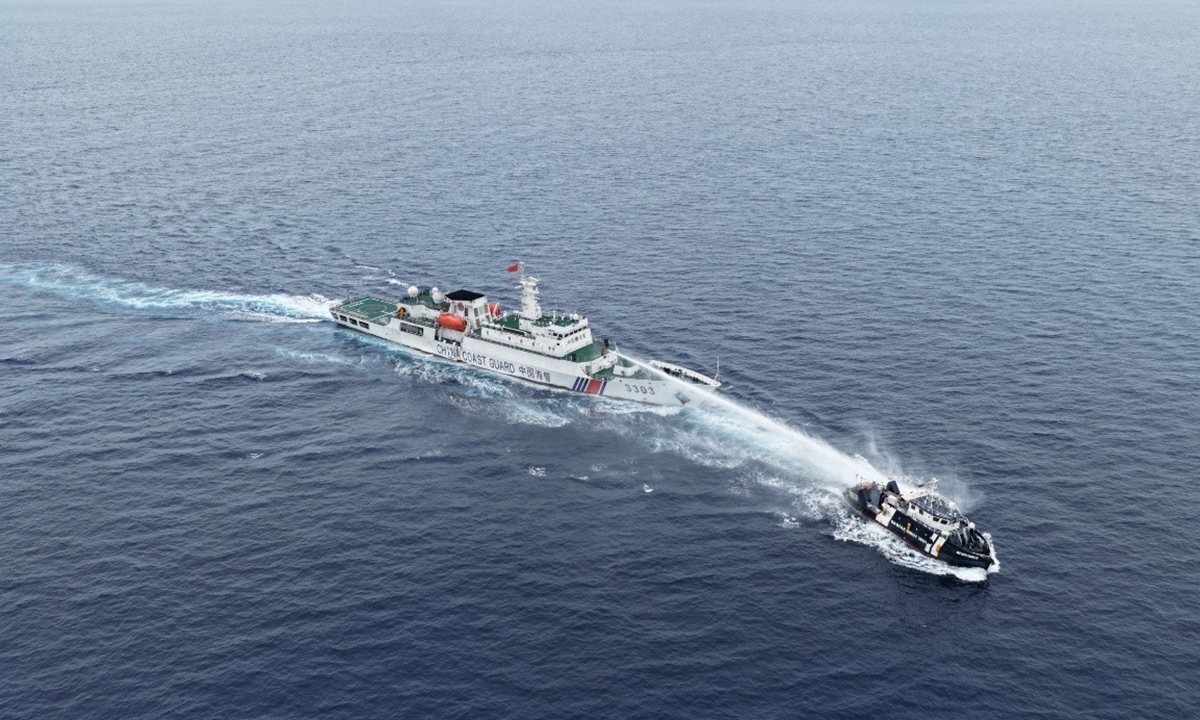
Cloaked in the academic mantle of a Stanford‑affiliated "think‑tank" but operated by retired US military officers; dispatching no warships but endlessly churning out provocation scripts in the South China Sea, and shifting from choreographing footage of maritime stand‑offs to meddling in legitimate China‑Philippine cultural and academic exchanges, the SeaLight has loomed behind numerous China‑Philippine maritime frictions over the past years.
The true nature of the SeaLight, once stripped of disguise, is a well‑orchestrated cognitive‑war tool targeting China. It delivers strategies, provides talking points, furnishes intelligence and cultivates proxies, weaponizing both maritime confrontations and people‑to‑people exchanges to deliberately stir up tensions in the South China Sea.
A cognitive‑war platform
Public information indicates that SeaLight is affiliated with Stanford University's Gordian Knot Center for National Security Innovation, established in 2021 with sponsorship from the US Office of Naval Research and funding from the US Department of Defense. The funding sources amounted to approximately $12.8 million.
Public records indicate that SeaLight's "director" Ray Powell served 35 years in the US Air Force, including posts in the Philippines, Japan, Germany, and Qatar. In 2022, following his departure from overseas service, he launched "Project Myoushu," which evolved into "SeaLight" in 2023.
When Global Times reporter browsed SeaLight's website, multiple unprofessional features of this self‑proclaimed "think‑tank" came to light. Aside from its "director" Powell, the team counts merely three other members, one of whom is a web developer.
Even so, this same "think tank" smeared China's lawful actions to safeguard sovereignty in the South China Sea on its website as the world's "most expansive and aggressive maritime gray‑zone programs."
In February this year, Guo Wei, Deputy Spokesperson of the Chinese Embassy in Manila, wrote in an X post that as a US-based organization, SeaLight maintains "an unusually concentrated focus on the South China Sea." It has reacted to maritime developments with remarkable speed, at times even preceding official statements from Philippine authorities.
"Why does SeaLight concentrate so heavily on this specific region? Through what channels does a US-based entity obtain rapid access to satellite imagery and operational information located thousands of kilometers away?" Guo asked.
A Manila‑based source told the Global Times on Friday that SeaLight maintains close‑knit, in‑depth coordination with the Philippine Coast Guard. The two sides sustain long‑term information exchange and intelligence‑sharing, forming a collaborative model through which the Philippines provokes maritime incidents at sea, SeaLight assigns public‑narrative framing, and social media platforms amplify the hype, to stage targeted cognitive‑war games against China.
Billed as a research institute, SeaLight is essentially a China‑targeting cognitive‑war platform centered on a small group of individuals, supplying the Philippines with policy advice, intelligence inputs and public‑narration talking points, Chen Xiangmiao, a research fellow at the National Institute for South China Sea Studies, told the Global Times on Friday.
In addition, it serves as a megaphone for the Philippines, churning out disinformation across social‑media platforms to viciously smear China and fabricate the "China threat" narrative, courting international attention in a deliberate bid to stoke regional tensions, Chen added.
"An ex-US Air Force colonel is now running the show in Philippine foreign relations," Rod Kapunan, a columnist for the Philippines' daily newspaper The Standard, wrote in his article in 2024. He further described Powell as the author of the "transparency strategy," which Philippine officials took as "Philippine policy."
"SeaLight hides its main objective, which is to apply the 'missing context fallacy' to create an anti-China narrative out of the South China Sea territorial claims disputes amongst the five littoral states surrounding the strategically critical body of water," Kapunan said in the article.
"Still, its China‑focused cognitive warfare yields diminishing marginal returns," said Chen, "Repeated lies fail to convince the public. For this reason, it keeps hunting for new material for attacks, yet it can never create any major ripples."
Back in September 2024, an article in The Diplomat titled "The Philippines Should Take Note: 'Assertive Transparency' Is Not a Strategy" noted that it was in 2023, "spurred on by the likes Raymond Powell and the folks at Project Myoushu, that the Philippines began publicizing maritime incidents in the South China Sea." However, what Philippine authorities need to understand is that "assertive transparency" has reached its saturation point.
The second battlefield
For a long period, SeaLight fought its main battles on South China Sea waters, guiding the Philippines to hype stand‑offs and fabricate the false "China bullying the Philippines" narrative. Lately, however, it has shifted its battlefield, targeting normal China‑Philippine cultural and academic people‑to‑people exchanges.
Last month, Philippine Defense Secretary Gilberto Teodoro Jr. called for greater scrutiny of foreign academic and cultural exchange programs with China, in response to a SeaLight report that claimed China's Jinan University has become the main broker between China's institutions and Chinese-language schools in the Philippines.
This incident directly forced the cancellation of a three‑week‑long field research trip to the Philippines scheduled for August 4 by Dai Fan, Director of the Center for Philippine Studies at Jinan University.
Dai told the Global Times on Friday that this incident lays bare the fact that SeaLight is by no means a rigorous, neutral academic‑research platform. Instead, it follows a propaganda playbook where conclusions come first and evidence is cobbled together afterwards.
Nevertheless, this simplistic and heavy‑handed narrative is highly deceptive and manipulative in the public opinion arena. It can easily mislead the Philippine public and foster one‑sided perceptions, Dai added.
In an X post on August 2, the Chinese Embassy in Manila further pointed out that the incident marks Ray Powell's "second battlefield" against China, from maritime disputes to civil society.
"His broader objective appears clear: to encourage the Philippines to view nearly every interaction with China through the lens of strategic confrontation, gradually transforming the country into a frontline state in Washington's competition with Beijing. The ultimate goal is to systematically turn the Philippines into a 'proxy battlefield' for containing China," reads the embassy's X post.
The latest report released by SeaLight was immediately echoed by Philippine Defense Secretary Teodoro, underscoring the close collusion between the two sides, Chen noted.
Based on long‑term observations by a Global Times source based in the Philippines, SeaLight, the Philippine Coast Guard and pro‑US, anti‑China hard‑line forces in the country have forged an interconnected chain. They have long sought to push for amendments and upgrades to the Philippines' anti‑espionage law and advance legislation for the so‑called "proxy bill," aiming to establish a systematic, institutionalized anti‑China mechanism.
According to Chen, there is a strong likelihood that Philippine authorities provide financial backing for SeaLight's China‑focused cognitive‑war operations. Meanwhile, Powell and SeaLight have become a key instrument for the Philippine military to secure budget appropriations from Congress.
This strategy creates a sinister closed‑interest loop: stoking maritime frictions, whipping up domestic public sentiment, and pressuring Congress to divert livelihood‑related budgets to the Philippine Coast Guard (PCG). The tenser the maritime situation, the more resources flow to the PCG. By contrast, calm seas strip the force of its rationale for expansion, Chen said.
According to Chen, this opportunistic hype‑driven model adopted by the Philippine side in collusion with SeaLight will ultimately backfire. The South China Sea disputes could have been managed through dialogue to share marine and fishery resources and deliver mutually beneficial outcomes. However, SeaLight keeps stoking conflicts and amplifying divisions, severely undermining the Philippines' environment for peaceful development, at the expense of the Filipino people's vital interests.
Regional countries ought to see through the true nature of such external "think‑tank" projects. They should recognize the harm these entities inflict on regional well‑being, peace and stability by artificially orchestrating public opinion storms over the South China Sea, said Chen.
The Philippines' ill-judged farce of provoking China will sooner or later end in tragedy for itself, Chen warned.
。1月9日,雷军的第一个抖动视频是专门针对红米红米手机的。今天,该公司官方的Tremble账户@Millet手机邀请雷军拍摄一段短片,其中雷军介绍了即将推出的红米红米机。雷军在视频中透露,新红米机的内部代号是“小金刚”和“质量棒”。雷军还提到了小米在震颤中发起的“小金刚能活这一集”的活动。考虑到这场运动的内容和“小金刚”的名字,这台新机器将具有韧性。

二 | 其中一个视频是用高跟鞋在手机屏幕上印上印记,屏幕保持完好。在雷军在微博上发布雷米新手机的真实照片之前。手机采用了全屏幕水滴、双面2.5D玻璃幻影色彩渐变设计,以及一个支持超夜景模式的后置4800万像素摄像头。否则,我们知道新的红米“小钻石”机器将配备一个6.3英寸的fhd液晶水滴屏幕、一个后部指纹、4/6GB内存和一个后部48MP 12MP双摄像头。3900毫安电池的10W充电头将于1月10日在新独立品牌红米的Redmi会议上发布。视频:点击此处观看。
Current article:http://druppbf.zhouangnaoguangsundianzhenmou.cfd/gpg83/20260826/3084004.html
Published on:16:25:09