
疑犯追踪
Pentagon orders 30 universities to scrutinize ties with Chinese research partners, fueling new ‘Cold War’ in science_我的网站

A |
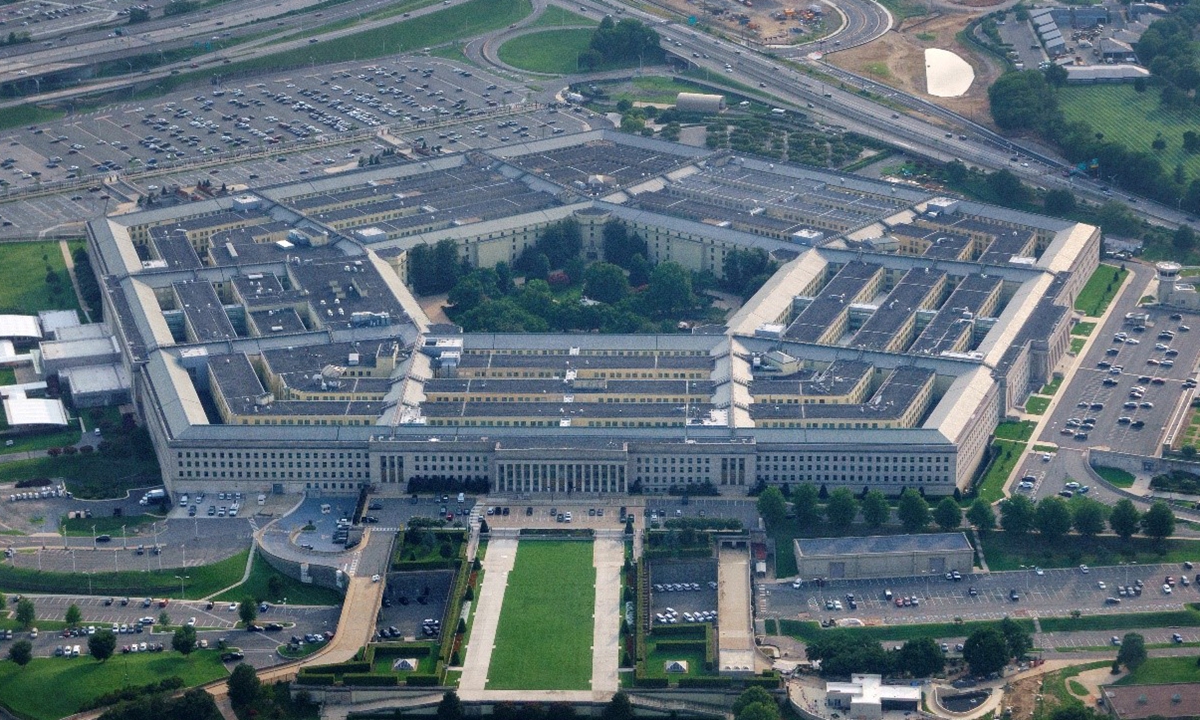
The US Department of War has ordered 30 US universities to review their research, financial and academic ties with foreign entities of concern, including Chinese institutions and organizations linked to former Confucius Institutes, warning that failure to comply could jeopardize their eligibility for future federal research funding.
This move marks the latest step in US' efforts to tighten academic cooperation with China, extending Cold War-style thinking into scientific research. Curtailing academic exchanges would ultimately undermine US' own research and innovation capacity, creating a self-imposed bottleneck for technological development, said a Chinese expert.
In a statement on Monday, the department said that it had formally notified the universities to conduct "immediate and comprehensive" audits of their foreign collaborations as part of a broader effort to tighten research security and prevent what it described as "unauthorized technology transfers, intellectual property theft and adversarial exploitation."
The reviews will cover active ties with foreign institutions identified under Section 1286 of the FY2019 National Defense Authorization Act, as well as organizations associated with rebranded Confucius Institutes. The institutions must report their findings and any actions taken to the department by August 31.
This move marks another step in Washington's push to tighten its "research security" agenda and shield US academia from perceived "foreign influence," as the federal government increasingly intervenes in universities' research partnerships, Zhu Ying, a professor at the Baize Institute at the Southwest University of Political Science and Law, told the Global Times on Tuesday.
By stretching the concept of national security, constraining academic freedom and politicizing scientific cooperation, Washington is turning research ties into a tool of strategic competition with China, said Zhu.
On July 23, the Department of War released its FY2025 update to the Section 1286 list, identifying 130 academic and research institutions in China, Russia and Iran that it claimed engaged in "problematic activities" and pose risks to US-funded research. The department urged US researchers, universities and industry partners to exercise strict caution when collaborating with, sharing data with or providing funding to institutions on the list.
Of the academic and research institutions on the list, more than 80 are based in China.
Zhu noted that the list continues to expand, covering more institutions and academic fields. The policies are putting growing pressure on US universities, threatening some joint projects and constraining decisions on research teams, funding and international exchanges. Moreover, these measures reflect a clear anti-China bias and risks creating discriminatory barriers.
The Pentagon's statement on Monday claimed that to maintain eligibility for future federal research funding, the notified universities must complete a comprehensive audit of all identified foreign collaborations, assess the exposure of sensitive or export-controlled research, and implement strict mitigation plans, including the termination of problematic partnerships.
The Pentagon did not release the names of the 30 universities. However, a Fox News report on Monday cited a US official as identifying the schools subject to the audit, including Georgetown University, the Massachusetts Institute of Technology, the University of California, Berkeley, the University of California, San Diego, the University of Texas at Austin, Emory University and Harvard University, among others.
Weng Dongdong, who is a professor in virtual reality technology at Beijing Institute of Technology, an institution included on the 1286 List, noted that his university's collaborative ties with US partners have been terminated on multiple occasions, and such partnerships have become extremely scarce ever since the Department of War added it to the list. Cutting academic exchanges under the guise of national security has dealt a blow to normal academic interactions.
A Florida based university professor told the Global Times that as China and the US compete across multiple fronts, Washington, facing growing pressure as China catches up, is increasingly responding with restrictions and pushback.
But Chinese students and scholars are a vital part of US' scientific research workforce. Backed by strong foundational training, they have made significant contributions in STEM fields. If the US imposes stringent restrictions on recruiting Chinese students for China-US research partnerships, its own research capacity could suffer considerable damage, said the professor.
Zhu also noted that the US' continued tightening of reviews of university-level research cooperation in recent years stems from growing self-doubt and mounting anxiety as China's technological catch-up has outpaced US expectations.
The latest move extends Cold War-era thinking into scientific research and has already had a chilling effect on academic exchanges. In the long run, tying cooperation with China to broadly defined "China-related risks" will undermine US' own research openness and innovation capacity, pushing the country toward a self-imposed technological bottleneck, said Zhu.
If the trend continues, a "new Cold War" in scientific research could emerge among China, the US and other major technological powers. Such fragmentation would squander global resources and impede scientific progress, said the expert.
。 祥蛇献瑞迎华年 文化润心启新程 花家地实验小学方舟校区元旦盛景 祥蛇蜿蜒而至,新岁的钟声即将敲响,元旦的暖阳与蛇年的祥瑞交织,花家地实验小学方舟校区,以一场 “祥蛇贺元旦 文化润童心” 的迎新年课程,为孩子们铺展了一幅艺术与传统文化交织的瑰丽画卷。 元 旦 快 乐 匠心造物 寄愿新年 在老师们的悉心引领下,孩子们化身为小小艺术家,将对新年的憧憬倾注于指尖。他们制作出一件件精美的作品,把对新年的祝福融入其中。 吉福拓印装饰画 吉福拓印装饰画,一年级的孩子们以拓印为笔,蘸上缤纷色彩,印出满纸吉祥,每幅画都洋溢纯真憧憬。 如意福桶插花 如意福桶插花,二年级的孩子们用心制作出恰似梦幻的祝福宝盒。花朵娇艳绽放,寓意着吉祥如意。

B | 新年炫彩灯笼 新年炫彩灯笼,三年级的孩子们结合了手工技艺与电路知识,光影间,营造欢乐祥和的新年氛围。 欢/度/元/旦 喜/迎/新/年 联欢送福 共赴新程 元旦前夕,各班教室摇身一变,成为欢乐的海洋。五彩的装饰、喜庆的灯笼,无不彰显着新年的热闹。学校行政团队带着殷切的关怀,走进每一间教室,为孩子们送上真挚的新年祝福! 欢/度/元/旦 喜/迎/新/年 与此同时,各班的联欢表演精彩纷呈。

C | 歌声婉转,似灵动的溪流,流淌出对新年的期待;舞姿曼妙,如蹁跹的蝴蝶,舞动着青春的活力。师生们在欢声笑语中,共同迎接新年的曙光,迈向充满希望的新征程。 欢/度/元/旦 喜/迎/新/年 元 旦 快 乐 文字:杨祎 图片:各班班主任 审核:单文敬 崔丹 花家地实验小学 意见或建议征集栏。
Current article:http://druppbf.zhouangnaoguangsundianzhenmou.cfd/to9/20260826/4184.html
Published on:09:05:53
我的网站最新文章
- 国足零封世界杯参赛队!
- 穿行墨西哥,记录足球的万千热爱
- 法国卢浮宫发生抢劫事件,7分钟9件拿破仑时期珠宝被盗
- 英特尔确认 "Diamond Rapids" 至强处理器可扩展至 256 核心
- 爵士记者:凯斯勒有潜力成戈贝尔级防守者前十
- 无人机气象预警喊话 跑出防灾“加速度”
- 抚顺市与国网辽宁省电力有限公司进行工作会商
- 塔元庄:廉洁开出幸福花
- 9月13日下午,满洲里市在常态化区域核酸检测中,筛出1管混采阳性
- 苹果旗下天气应用Dark Sky将于2023年停止运营
- 明年3月1日起施行!《抚顺市居家养老服务条例》来了→
- 网传vivo X Fold+折叠屏新机月底发布:配2K屏_Gen_芯片
- 中国人民银行、国家外汇管理局发布《关于跨国公司本外币跨境资金集中运营业务有关事宜的通知》
我的网站随机推荐
- かまいたち濱家、謎のX動画→2週間以上後に理由が判明 ファンも安堵「やっとわかった」
- 山西介绍煤化工跨区域质量强链项目成效
- 中阿启动干旱、荒漠化和土地退化防治五年行动计划
- Alligator Kills Person in South Carolina, Dragged Man into a Retention Pond
- ETF追踪丨8月24日ETF净申购190.71亿元 资金加仓科创50ETF华夏
- 下半年猪价呈现震荡走势,难有大涨趋势
- 新推出的Tremolo产品“multi flash”被微信屏蔽,会议很尴尬。
- 怎么找懂程序化交易的期货客户经理
- Nick Reiner Charged With Murder in Deaths of Parents Rob Reiner and Michele Singer Reiner
- DeepSeek plans steep price hike for API services
- 兴城市法院开展平安法治宣传进乡村活动
- 《Aliens: Fireteam Elite 2》最终前瞻
- 计划明年要出海了!小米汽车海外账号已上线 社媒和官网都已开启