
- 作者:帝帝
- 来源:疯狂的麦克斯
- 发布时间:2026-08-26
职来职往
Exclusive: Brazilian soybean industry expects historically high export volumes to China: association_我的网站

一 |
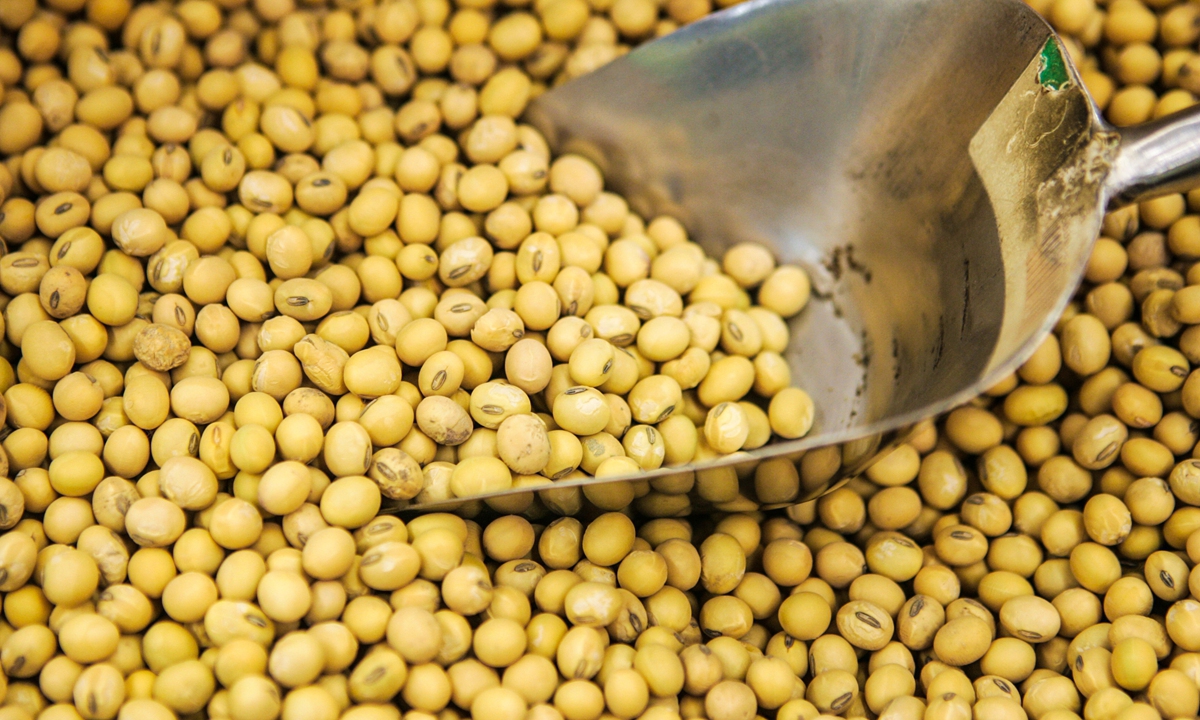
China continues to be the leading destination for Brazilian soybeans, and the Brazilian soybean industry wants to further deepen this relationship, expecting historically high volumes in the coming months, the Brazilian Association of Soybean Growers (Aprosoja Brasil) told the Global Times on Friday.
Brazilian soybean exports to China have remained very strong. China imported 12.08 million tons of soybeans from Brazil in June, up 13.7 percent year-on-year, while imports from the US fell 20.9 percent year-on-year to 1.27 million tons, according to data from the General Administration of Customs.
China imported 34.75 million tons of soybeans from Brazil during the period, up 9.1 percent year-on-year, according to Aprosoja Brasil. "Based on arrivals and customs clearance in China, there was clear growth," the association said.
According to the official data platform Brazilian Comex Stat, which records shipments at origin, 48.32 million metric tons were destined for China from January through June, largely unchanged from 48.41 million metric tons during the same period in 2025.
The difference between the two datasets mainly reflects timing and methodological differences between the recording of departures, cargoes in transit, arrivals and customs clearance.
Aprosoja Brasil said that the broader economic conclusion is the same: "Trade flows remained historically strong, China continued to be the leading destination for Brazilian soybeans, and Brazil's total soybean exports reached a first-half record of 69.57 million metric tons."
For farmers, strong export volumes help support the marketing of the crop, although record exports do not automatically mean record farm margins, said the Brazilian industry association.
China is the world's largest soybean importer. Imported soybeans are mainly used for oil production and animal feed. In terms of trading partners, China mainly imports soybean-related products from Brazil, the US, Argentina, Uruguay and Canada.
Brazil ranks among the world's leading soybean producers and exporters, with China being its largest export market for soybeans, according to the Xinhua News Agency.
Commenting on the significance of the Chinese market, Aprosoja Brasil said "China is absolutely strategic to Brazil's soybean industry," citing data showing that in 2025, China purchased 85.4 million metric tons, representing approximately 79 percent of all Brazilian soybean exports.
The two countries also have a highly complementary trade relationship. For Brazilian farmers, Chinese demand provides scale, market liquidity and greater capacity for long-term planning, said the Brazilian soybean industry association. For China, Brazil offers large, competitive and reliable supplies, as well as a crop calendar that complements production in other supplying countries.
Previously, policy shifts, such as US unilateral tariff measures, have caused disruption for US soybean farmers and other agricultural producers, Lü Xiang, research fellow at the Chinese Academy of Social Sciences, told the Global Times.
At the same time, China has been diversifying imports, including from Brazil and Argentina, to reduce risks from trade uncertainty, according to Lü.
Aprosoja Brasil noted that this partnership should not be seen merely as a temporary consequence of trade disputes involving third countries. Instead, it is a structural and mutually beneficial relationship, based on the complementarity between Brazil's production capacity and China's large demand for food, animal feed and protein, the industry group said.
Looking ahead to the soybean trade for the rest of the year, Aprosoja Brasil said that they are positive, while having a prudent mindset. Brazil has completed the harvest of a record soybean crop of approximately 180.6 million metric tons, and Brazilian soybean exports are expected to reach 116.3 million metric tons in 2026, which would also be a record, the association said.
"Brazil therefore has sufficient supply to continue serving the Chinese market strongly in the coming months... We expect historically high volumes, although not necessarily growth every single month, because soybean trade is seasonal and Northern Hemisphere supplies become more prominent during the second half of the year," it said.
。

二 | 1月16日上午,《北京时间》美国科技媒体TechCrunch援引尼尔森最新报道称,过去8年中,放弃传统有线或卫星电视服务并使用数字天线接收无线电信号的家庭数量增加了48%,达到1600万户。目前,14%的美国家庭通过互联网观看电视节目。尼尔森说有两种主要类型的人取消了传统的电视服务。一个是年龄较大的观众,平均年龄为55岁。该组只通过数字天线观看电视,不订阅任何流媒体服务。这一群体包括660万家庭,他们更加多样化,中位数收入更低。对他们来说,取消传统的电视服务主要是为了省钱,而不是为了获得个性化的观看体验。2010年至2018年间,美国940万家庭通过互联网观看电视节目,另外一组940万家庭至少订阅了一个视频服务,如Netflix、Hulu或Amazon Prime Video。这一群体年龄较小,中位数为36岁,收入较高,更喜欢使用网络设备。因为他们使用更多的设备玩游戏或查看社交网络,所以他们花更少的时间观看传统媒体。这也会影响他们看电视的时间。研究发现,在美国家庭中,购买订阅视频服务的人每天通过互联网看电视的时间超过6小时,比那些不购买订阅视频服务的人多2小时。购买视频订阅的人在社交媒体上也更活跃,这可能是因为他们的年龄和设备数量。

三 | 他们平均每天花一小时使用社交媒体,比不订阅视频服务的人多17分钟。在18岁以上的人群中,通过不同频道观看节目的用户比例较高,但两组都喜欢在电视上观看电视内容。

四 | 尽管智能手机和平板电脑等设备的使用有所增加,但大屏幕电视似乎仍然是电视内容的主要观看设备。

五 | 此外,购买订阅视频服务的少数互联网观众将使用其他虚拟服务提供商,包括提供直播电视节目的流媒体服务,如YouTube电视、带直播电视的Hulu、PlayStation Vue或Sling电视。截至2018年5月,该群体的总户数已超过130万户。尼尔森对第三组进行了一项更深入的研究,发现他们拥有大学学位的可能性高出54%,拥有孩子的可能性高出19%,拥有互联网的可能性比普通家庭高出95%。他们也比其他购买视频订阅服务的团体看电视的时间长,分别是3小时27分钟一天和3小时22分钟一天。
Current article:http://druppbf.zhouangnaoguangsundianzhenmou.cfd/t1jp5e/20260826/4481.html
Published on:05:39:51
- 本文标签:
- 太极张三丰