巨星秀
Asking a PU schoolgirl to take off her hijab at her school gate, is an invasion on her privacy: Justice Dhulia_我的网站

一 |
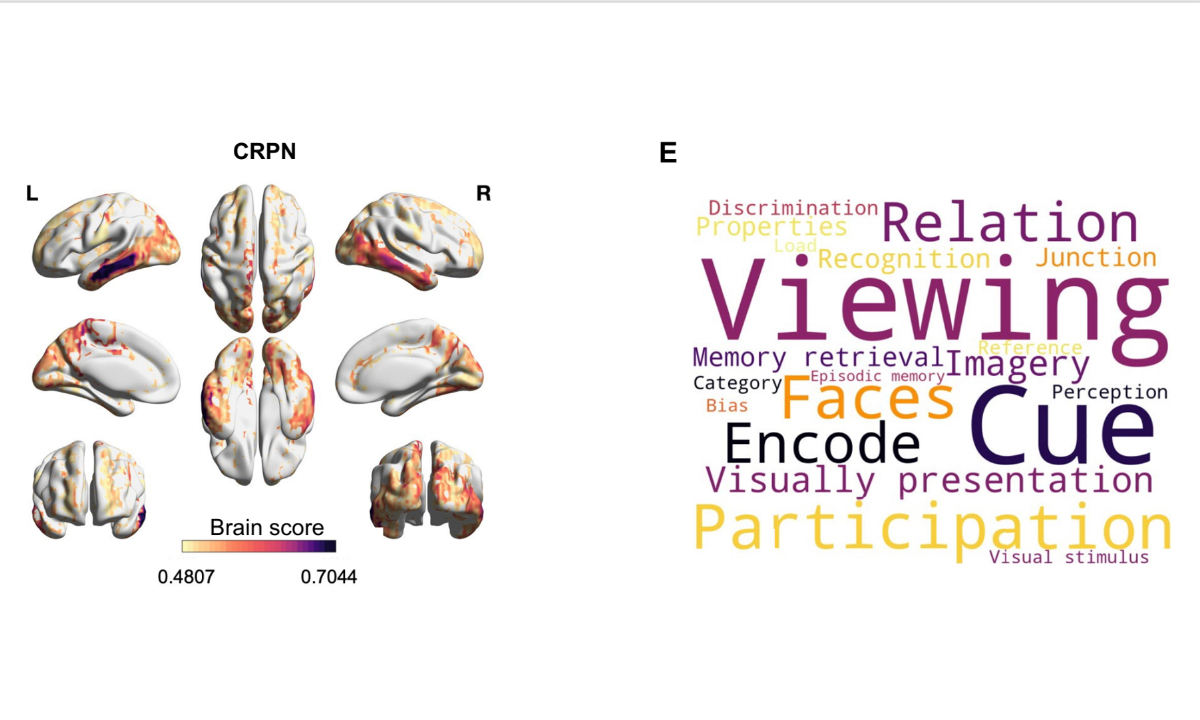
Brain-reading AI model reveals how different brain regions are linked to cognitive functions. Photo: Courtesy of Lu Han
Chinese scientists have developed a “brain-reading” AI model that could help predict the risk of depression among adolescents up to four years in advance by analyzing how humans respond to facial expressions, a technology expected to inspire future development of embodied intelligent humanoids capable of perceiving human emotion and thoughts through nuanced facial cues.
WHO data show that around 332 million people worldwide have depression, about one-third of whom have treatment-resistant forms of the condition. In China, an estimated 95 million people suffer from depression, National Business Daily reported, citing statistics from the China Mental Health Survey.
Using data from a population-based longitudinal adolescent cohort recruited across several European countries, the research team led by Lu Han, assistant professor at the School of Artificial Intelligence, Shenzhen University, has built an AI model that predicted which 19-year-olds were more likely to develop depression at the age of 23. The predictions were backed up by an independent clinical cohort of individuals with depression. The team’s paper was published in the journal Science Advances this month.
According to Lu, the study used brain scans taken at age 19 to predict depression-related symptoms at age 23. The study focuses on adolescence because the transition from adolescence to early adulthood is a key developmental period when depressive symptoms can increase rapidly. The earlier risks are identified, the greater the opportunity for prevention, Lu told the Global Times on Monday, adding that the findings need to be further validated in middle-aged and older adults and across different ethnic groups in future research.
In this study, the researchers analyzed data from adolescents in the IMAGEN, a population-based longitudinal cohort recruited across several European countries. At age 19, participants underwent an fMRI emotional-face task, and their emotional symptoms were assessed using standardized questionnaires. Genetic data obtained from blood samples were also analyzed, and participants were followed up at age 23. The researchers examined whether neural representations of angry faces at age 19 were associated with emotional symptoms and could predict elevated emotional symptoms four years later.
According to Lu, people without depression can more easily distinguish emotional changes based on others’ facial expressions and respond accordingly – for example, responding with friendliness to a smiling expression. But people with depression cannot do this, and are more likely to assume people are angry with them.
A brain-aligned deep-learning model developed by Lu’s team suggested that those participants whose brains were less able to distinguish between different facial emotions and tended to perceive others as angry were more likely to develop symptoms of depression and anxiety in adulthood.
The hypothesis that adolescents at risk of depression may respond differently to other people’s facial expressions than those without such risk based on the negative information processing bias long observed in depression research: people at risk of depression are more likely to notice, interpret, or remember negative social information, Lu said.
The researchers focused on angry facial expressions because they signal social threat and rejection, which are closely linked to interpersonal difficulties and negativity bias associated with depression. They hope to further understand how this bias develops within the visual system.
Building on this, they created a deep learning model, which mimics how the brain processes visual information, to predict how the brain encodes abstract emotional concepts such as anger.
They found that 19-year-olds whose response to facial expressions was skewed in favour of negative emotions or memories were the most likely to develop some form of depression.
Based on these findings, Lu’s team then developed a marker that can identify possible warning signs.
According to Lu, the study found that the computational biomarker was linked to the depression-related variant rs11123030 and polygenic risk for depression, suggesting that genetic susceptibility may affect emotional perception. It also provided predictive information beyond family stress and socioeconomic factors, complementing rather than replacing environmental risk factors. Therefore, depression is neither purely genetic nor purely psychological, but a complex mental disorder arising from the interplay of genetic susceptibility, brain development, emotional and cognitive processes, and life experiences.
According to Lu, the study is also expected to advance AI by aligning deep neural networks with human brain activity and using parameter perturbations to probe neural mechanisms, allowing models to both predict and explain how biases may arise.
The findings suggest that future affective computing and embodied AI should go beyond simply labeling facial expressions, incorporating visual details while preventing prior assumptions from overriding real-time sensory input, Lu said, adding that the findings could provide valuable insights for developing more interpretable robotic perception systems that more closely emulate the way humans process emotions.
。

二 | New Delhi, Oct 13 (UNI) One of the judges in the Supreme Court bench, Justice Sudhanshu Dhulia, differed with the view of his colleague, Justice Hemant Gupta on many issues.
Justice Dhulia said that asking a pre university schoolgirl to take off her hijab at her school gate, is an invasion on her privacy and dignity.
"Asking a pre university schoolgirl to take off her hijab at her school gate, is an invasion on her privacy and dignity. It is an attack on their dignity, and then ultimately it is a denial to them of secular education. These are clearly violative of Article 19(1)(a), Article 21, and Article 25(1) of the Constitution of India," Justice Dhulia said, in his verdict.
"Under our Constitutional scheme, wearing a hijab should be simply a matter of Choice. It may or may not be a matter of essential religious practice, but it still is, a matter of conscience, belief, and expression. If she wants to wear hijab, even inside her class room, she cannot be stopped, if it is worn as a matter of her choice, as it may be the only way her conservative family will permit her to go to school, and in those cases, her hijab is her ticket to education," Justice Dhulia said, in his verdict.
Justice Dhulia even went onto say that the unfortunate fallout of the hijab restriction would be that we would have denied education to a girl child. A girl child for whom it is still not easy to reach her school gate.This case here, therefore, has also to be seen in the perspective of the challenges already faced by a girl child in reaching her school.
"The question this Court would put before itself is also whether we are making the life of a girl child any better by denying her education merely because she wears a hijab!," Justice Dhulia questioned?
Our Constitution has visualised a just society and it is for this reason that the first virtue that is secures for the citizens is ‘Justice’ which is the first of our Preambular promises, he said.
On the other hand, the judge heading the bench of the Supreme Court, Justice Hemant Gupta, differed with the view of Justice Sudhanshu Dhulia and said that the Government (Karnataka) Order cannot be said to be contrary to the State goal of promoting literacy and education as mandated under the Constitution.
"Article 21A is not applicable as all the students are over 14 years of age. The students have a right to education under Article 21, but not of insisting on wearing something additional to the uniform, in a secular school, as a part of their religion," Justice Gupta, heading the bench of the Top Court said.
"Secularism applicable to all citizens. Permitting one religious community to wear religious symbols would be antithesis of secularism. Govt Order can't be said to be against secularism or objective of Karnataka Education Act," Justice Gupta in his 133-page, out of 209-page, verdict said.
"It can't be said that State is restricting the access to education to the girl students through such an Order. The Government Order only ensures that the uniform prescribed is adhered to by the students and it cannot be said that State is restricting the access to education to the girl students through such an Order, Justice Gupta said.
He went on to say that the Act itself contemplates providing of opportunities and facilities in a healthy manner and maintaining the dignity of childhood and youth so that there is no moral or material abandonment. "The uniform for the students has been prescribed so that there is no distinction between the students coming from diverse background and that each student grows in an environment of equality, fairness and equal opportunities," Justice Gupta said.
The uniform is an equalizer of inequalities. Therefore, prescribing uniform for children at an impressionable age is not only important but has a salutary effect on the mental development of the child to grow in the environment of oneness, he said.
Justice Gupta, find that the following 11 questions arise for consideration in the present appeals:
Whether the appeals should be heard along with Kantaru Rajeevaru (Right to Religion) and/or should the present appeals be referred to the Constitution Bench.?
Whether the State Government could delegate its decision to implement the wearing of uniform by the College Development Committee or the Board of Management or otherwise on headscarves is ex facie violative of Section 143 of the Act?
What is ambit and scope of the right to freedom of ‘conscience’ and ‘religion’ under Article 25? What is the ambit and scope of essential religious practices under Article 25 of the Constitution?
UNI SM BAV GNK。
Current article:http://druppbf.zhouangnaoguangsundianzhenmou.cfd/news/20260826_7355.html
Published on:10:27:13